

Faith and everyday life
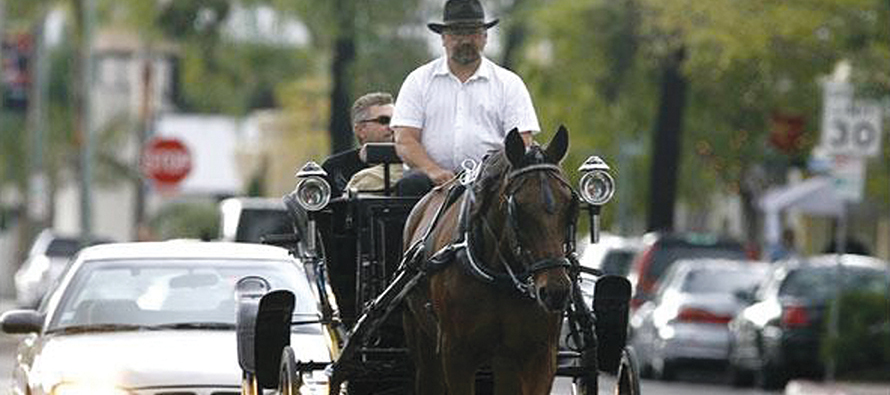
Image: In many ways the church today is riding a horse and buggy while the communications industry is moving in a sports car, and we haven’t understood the full implications of this gap.
SPIRITUALITY is a buzzword today, and it covers many things. Spiritually for some people means gazing into crystals, for others it means 12-step programs. Sometimes my students say that they are spiritual but not religious or they believe in spirituality but they don’t believe in religion.
I am going to focus on the notion of spirituality with the adjective Christian, and even that is a difficult phrase to identify. In a recent book I wrote I have an appendix in the first chapter that lists 28 different definitions of Christian spirituality. But for our purposes I am simply going to describe spirituality as living the Christian life in the concrete situation in which we find ourselves. In that sense Christian living will have different emphases depending on who we are. As Saint Francis de Sales put it in the opening pages of his classic work Introduction to the Devout Life, “A devotion in which conflicts with anyone’s state of life is undoubtedly false.”
A certain way of life
Let me start off with something rather contentious: Being a Christian does not mean accepting on faith a certain number of ideas or doctrines abstractly put or moral teachings or codes of conduct. Being a Christian means to adopt a certain way of life, and I am going to put my emphasis on the word way.
In the New Testament the earliest recorded name of the followers of Jesus was that they were followers of the way. Saint Paul, in the Acts of the Apostles, says that before he was converted he was a persecutor “of the way.” Being Christian is a way of life—and a way of discipleship. The word disciple occurs 250 times in the New Testament. Of those 250 times, 70 times the word is linked to some form of the word follow. To be a disciple is to be a follower.
The fundamental basis for being a Christian is to become a disciple of the living Jesus, to learn of him, what he stands for, what he has done, what he has promised, and how in following him you become a new kind of person. Being a Christian means to adopt a certain way of life, and that way of life is the way of discipleship.
Commitment to that way of discipleship
Every kind of discipleship demands a commitment; it does not come instantly. That is why we call this way of discipleship a way of life. It takes time and experience, failure and success, joy and discouragement, to advance as a disciple. That is pretty clear from the New Testament where even those who were closest to Jesus didn’t always understand what he was talking about. Indeed the Gospel of John over and over again says it was not until the time of the Resurrection that they understood what Jesus fully meant. If the way of discipleship, this way of life is one that demands growth, it simply means that Christians must grow in maturity.
Growth in this way of discipleship with Jesus is a process by which we can learn from those who have gone before us. The Letter to the Hebrews talks about a cloud of witnesses, the people who are with us now and who have gone before us, some of whom we celebrate as saints. We have an enormous tradition that stands behind the Catholic tradition that helps us to understand the way of discipleship, yet not everybody is called to every way of discipleship.
We all believe the basic creed and worship in the same liturgy and observe the same moral life, but the ways in which we can mature as Christians are many. If you like your religious practice to be exuberant we have ways of being exuberant. If you like to follow the poor Jesus we have the Franciscan tradition. If you want to follow the Jesus who spends the night in prayer we have the contemplative tradition. The point is that in the paths of maturity we don’t have to invent the Christian life over and over again. What we need to do is find those resources that help us to understand what it means to be a follower of Jesus.
Christian life in the coming millennium
What is the new millennium going to bring us as Catholic Christians? The church in the new millennium will do the same thing it has done in the past two millennia: It will gather the community, it will invite others to join, it will tell the saving story of Christ, and it will break the bread. That was the task of the church in its beginnings, it is its task now, and it will be its task in the future. Paul tells us in his letter to the Corinthians that we will break the bread until the Lord comes again. What is going to be interesting in the new millennium is to ask the question, “How is that story going to be told? And how is that bread going to be broken?”
Second, Christians of the future, the theologian Karl Rahner once wrote, will either be mystics or not Christian at all. Rahner saw rather clearly that this kind of Catholicism he knew growing up, of a close-knit community with common values, was disappearing under the forces of secularization, urbanization, and other factors.
The point that Rahner was trying to make was that in the future people were either going to have to be committed to the Christian faith by experience or they would not be Christians at all simply because there would be no cultural pay-offs; the culture was not going to support the idea of being a Christian. In our country today, people are still vigorous churchgoers. It always amazes Europeans to come to this country and discover how much Christians still value churches and support religion. But in this country there has also been a shift away from the cultural model about which Rahner was speaking. So the new question is do we today have the resources, and do we have the understanding, to allow people to be deeply experiential in their faith in order to sustain them in a culture that in this country is not hostile but largely indifferent to religious values?
Third, Christians of the future will have to take into account, if they want to be a vital part of the human community, the simple, observable fact that our culture is becoming increasingly pluralistic. There are dramatic shifts taking place all over the western world. The second largest religious tradition in France today is Muslim. You can go to any city in America today and see this religious pluralism. What does that say about the future of Christian values and how these values are going to be understood? If the church is going to be a voice, it’s going to have to take into account this radical religious pluralism.
Pope John Paul II in his encyclical Redemptoris Missio said that just as Saint Paul had to go to the Areopagus—the main square of Athens—to speak about the gospel in terms the Athenians would understand, so today we have a new areopaguses, we have a new playing field, we have a new audience today we have to speak to. How is the language of the gospel made sense of amidst the many competing voices of the pluralism of opinions, the pluralism of ideas, the pluralism of cultures in the interconnected world in which we live?
Fourth, we are living today through the greatest communications revolution since Johannes Gutenberg’s15th-century invention of movable type in the West, which radically changed the communication system in Europe. Books became inexpensive and could be put in the hands of everyone, which led to a rise in literacy and a thirst for reading material. Human beings lived in a book culture ever since then until the 20th century when we began to have radio and television. But today in the age of computers, cheap televisions, and cellular networks, what is the future of preaching the gospel going to be in those circumstances? In many ways the church today is riding a horse and buggy, while the communications industry is moving in a sports car, and we haven’t understood the full implications of this gap.
Crisis and opportunity?
There are many problems facing the church in the new millennium. You could even say it’s a crisis—but in Chinese the character for crisis means both “danger” and “opportunity.” We have to ask how well we communicate the gospel in this new world in which we live. If the world asks for bread, are we giving them bread or are we giving them a stone?
Tags
Related
- Questions Catholics Ask
- What Catholics believe about the Eucharist
- How Jesus embraced his call
- Prayer: Our never-ending conversation with God
- What the church is teaching—and learning—about the sin of racism
- Church defined: Jesus calls; we respond
- A Creed to believe in
- On whose authority?
- Ten great things about being Catholic
- Following Jesus: Be ready for some surprises Read More
Most Viewed
- Find your spirituality type quiz
- Questions and answers about religious vocations
- Celibacy quiz: Could I be a nun? Could I be a brother? Could I be a priest?
- Resources for older discerners or those with physical and developmental differences
- About Vocation Network and VISION Guide
Most Emailed
 Lawrence Cunningham is the John A. O'Brien Professor of Theology at the University of Notre Dame. This article is adapted from a lecture he gave as part of Notre Dame’s Satellite Theological Education Program (STEP), which offers quality online theological education and faith formation opportunities to adult Catholics across the country. For more information on STEP, visit http://step.nd.edu. Members of religious communities, and others associated with them, who advertise in the VISION Annual Religious Vocation Discernment Guide and on the VISION Vocation Network website can take STEP courses at a 20 percent discount.